
Predatory Practices: How Recruitment Practices Enable the Exploitation of Migrant Workers Through Debt
This is the salary schedule of Rini (name changed to protect identity), a migrant domestic worker (MDW). Her recruitment fees amounted to $3,800, stretched over more than 8 months. Each month, she received an "allowance" of around $140, instead of her full pay.
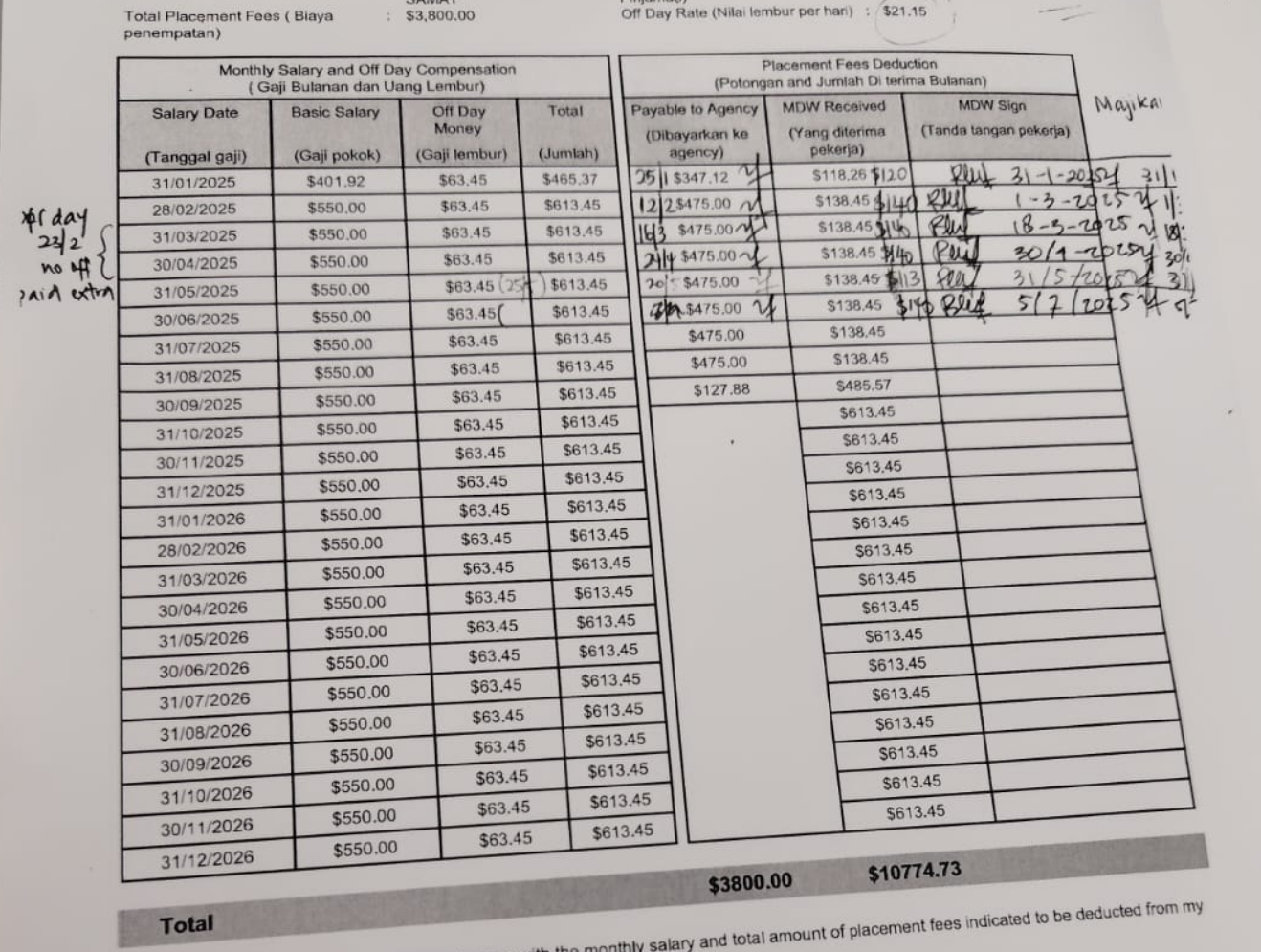
Photo of Rini’s salary schedule, courtesy of HOME
In Singapore, recruitment agencies are not allowed to charge more than two months' fees for a two-year work permit term. However, they are not prohibited from collecting fees on behalf of overseas agents, resulting in the total loan deduction period typically stretching beyond four months in order to pay off the recruitment fees incurred both in Singapore and their home countries.
The indebtedness that migrant workers face as a result of recruitment fees makes them more vulnerable to abuse and exploitation, and is instrumental in their acceptance of deteriorating working conditions. For MDWs in particular, during their salary deduction period, they may be given less rest days, and have restrictions on their mobile phone use. Some even have their passports confiscated at this time (for fear that they will 'run away'), even though this practice is illegal. Others are denied transfers even if they find their living and working conditions untenable: they are told instead to wait until their salary deduction period is over.
HOME has long advocated moving to a "zero recruitment fees" policy, While the longer-term goal is to shift towards the ILO Fair Recruitment Initiative’s model of zero recruitment fees borne by migrant workers—that is, an employer-pays model—some interim measures are required. For example, while the law requires employment agencies to provide to workers an itemized breakdown of their recruitment fees, this is often not the case. Better enforcement is needed in this regard.
Better cross-border cooperation with MDWs’ home countries to regulate recruitment fees is also needed. Political will needs to be directed towards ensuring that bilateral and regional agreements are also focused on aligning labour standards to ensure fairness and transparency.
Published 23 Jan 2026