Tightening Massage Establishment Rules Must Address Worker Exploitation
I refer to the report on new regulatory changes for massage establishments (“Massage shops set for stricter rules”, April 21).
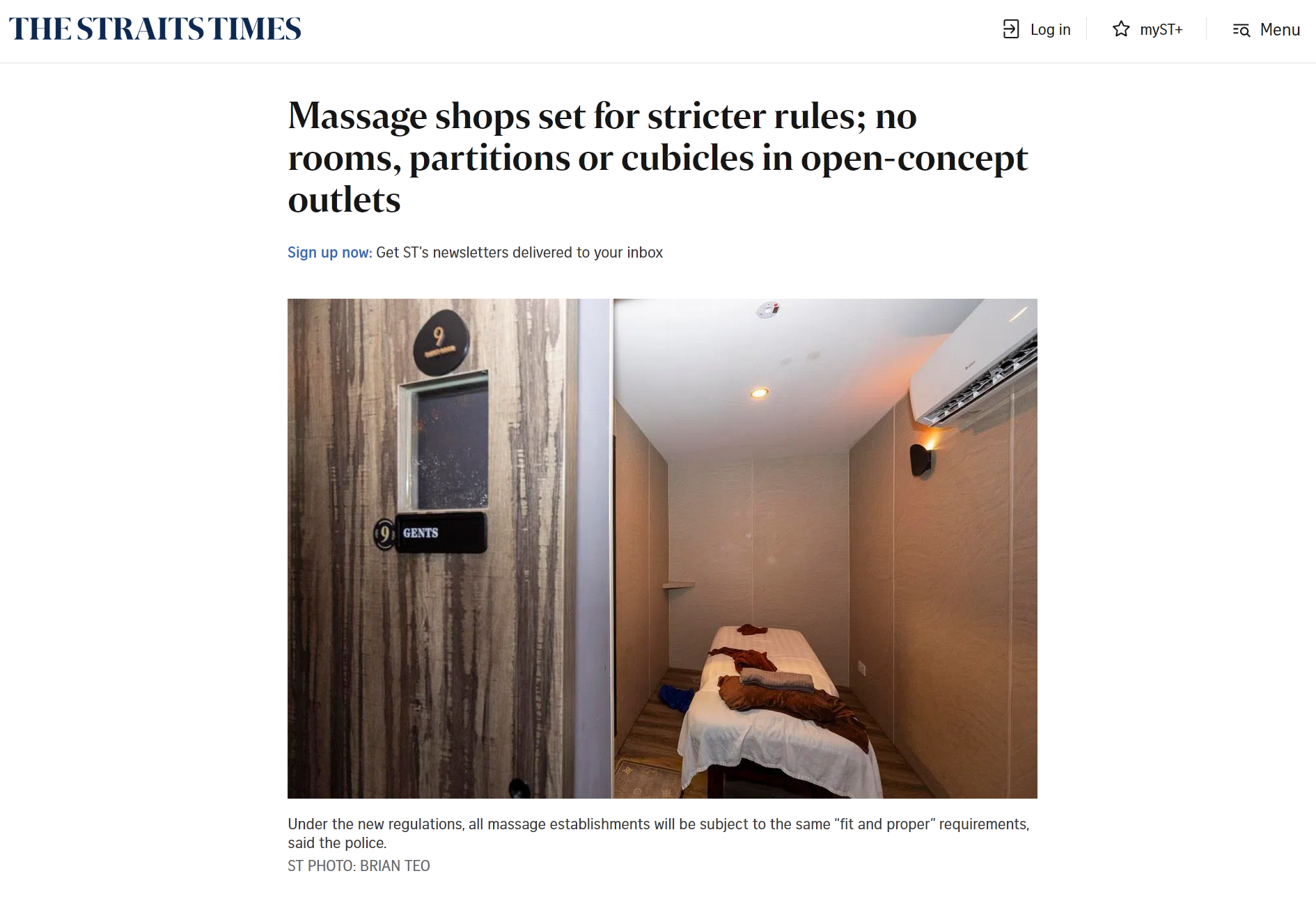
Screenshot of the Straits Times report.
The current conversation has been largely silent on the people working inside these establishments. The Humanitarian Organization for Migration Economics (HOME) has encountered many migrant women who were recruited through deception. They are promised roles as beauticians, receptionists or legitimate masseuses, but upon arrival are pressured into providing sexual services. Many incur significant debt to secure these jobs, increasing their vulnerability, and are often coerced under threat of repatriation. Their working conditions frequently involve long hours, close surveillance, isolation, wage deductions and withheld salaries. Taken together, these elements, along with work pass irregularities, reflect recognised indicators of forced labour and trafficking under international law.
Yet these same women risk being criminalised during enforcement raids. HOME has assisted in cases where workers deemed to have engaged in “vice” activities were at risk of being sent back without being able to claim unpaid wages. Only after HOME escalated their cases to the relevant authorities by filing salary and trafficking claims were these cases investigated. Even then, remedial justice is often limited due to a lack of evidence, and the risk of penalties for workers remains.
Effective regulation requires more than stricter licensing. It requires law enforcement officers trained to recognise coercion and abuse of vulnerability, clear victim identification standards aligned with international frameworks, and a non-criminalisation approach that ensures workers, regardless of work pass status, can recover unpaid wages, seek reimbursement of excessive recruitment fees, and find safe pathways forward.
In trying to placate residents’ concerns, regulators should not ignore the realities of demand for such services. Enforcement often targets the most visible and vulnerable individuals — the workers — while providing them little protection and limited access to remedy.
Dr Stephanie Chok
Executive Director
Humanitarian Organization for Migration Economics
Published 06/05/2026