
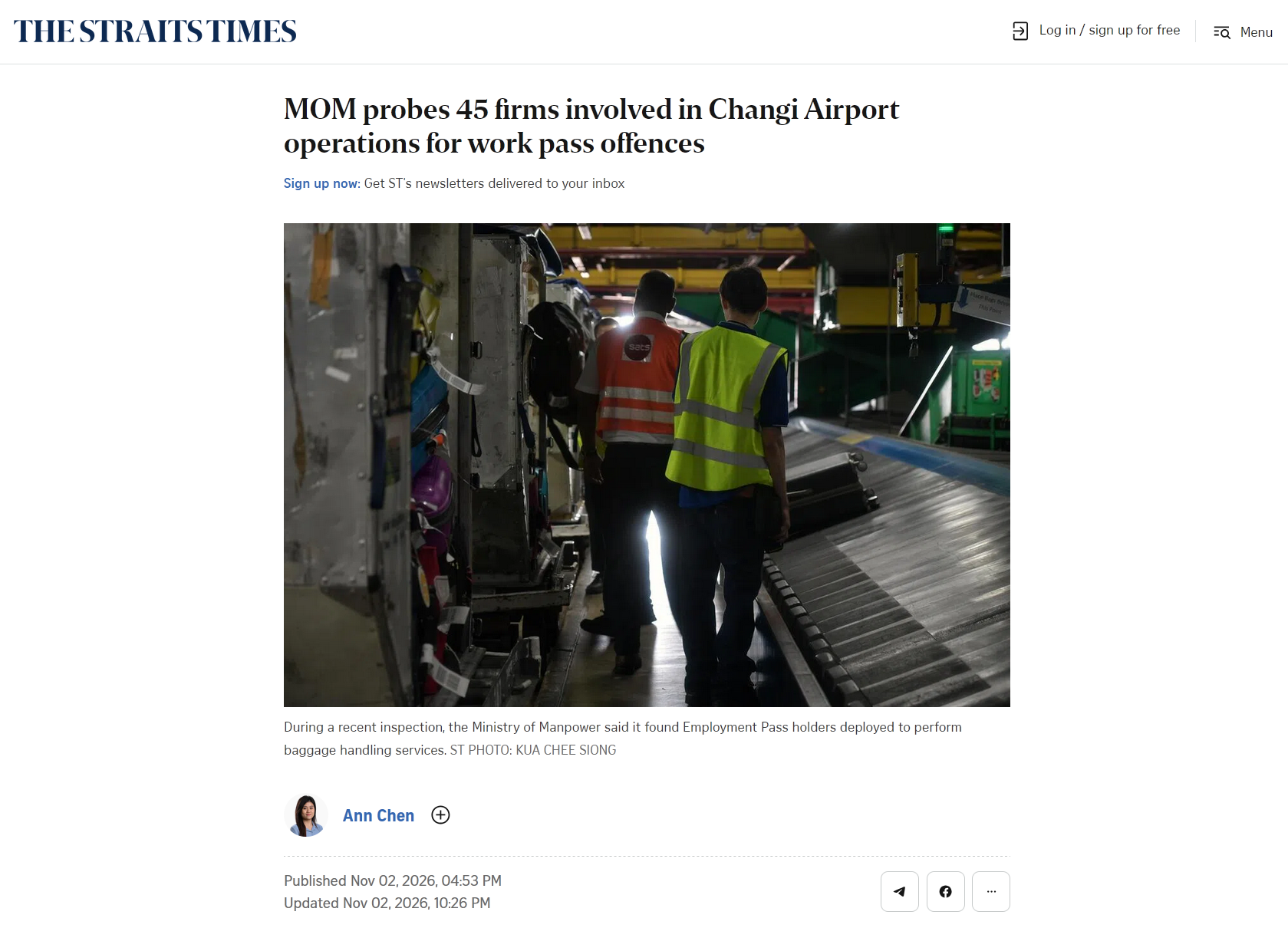
We refer to the report on the Ministry of Manpower’s investigations into suspected work pass offences involving companies supporting Changi Airport operations.
The Humanitarian Organization for Migration Economics (HOME) has been raising concerns with MOM about the abuse of Employment Pass arrangements since 2025. Our casework indicates “EP holders” are being deployed to low-paid sectors such as parcel delivery, cleaning, and food and beverage services, which are occupations typically hired under Work Permits.
In meting out punishment, we urge MOM to distinguish between employers and agents who profit from such arrangements and workers who have been deceived. This will require stronger cross-border cooperation as the deception often originates in source countries. A victim-centric approach will ensure affected workers are allowed to recover unpaid salaries, seek redress, and be given meaningful opportunities to secure jobs in Singapore, rather than face repatriation and be blacklisted.
These Employment Pass applications are used to circumvent Work Permit quota, source country restrictions and evade Foreign Worker Levies imposed by MOM. Our work pass system, which restricts the number of lower-paid Work Permit holders in many sectors, does not reflect labour market demand, leading to employers and agents circumventing regulations to fill it. HOME has met many deceived and indebted workers who feel coerced to stay in such jobs despite highly exploitative working conditions, including excessive working hours, abject living conditions, inadequate food, and underpayment. MOM urgently needs to review its work pass policies to reflect labour market realities, or this issue of illegal deployment and false declarations will continue, along with suppressed wages and poor working conditions.
The cases also underscore the need for companies to maintain stronger oversight and accountability throughout their supply chains. Companies’ tenders for outsourced services should include requirements for strong labour protections, including whistleblowing protections for workers. Contracts should not simply be awarded to the cheapest bidder.
Effective enforcement must hold those responsible accountable and protect workers who have been deceived and underpaid. In the longer term, Singapore needs to address the conditions that allow these arrangements to persist, including a poorly regulated recruitment industry, a misaligned work pass system, and an economy dependent on low-paid labour.
Stephanie Chok
Executive Director
Humanitarian Organization for Migration Economics
Published on 5 November 2026